

KNEE OSTEOARTHRITIS
Knee osteoarthritis is a prevalent joint condition that affects millions of people worldwide. It occurs when the protective cartilage that cushions the ends of your bones wears down over time. This can lead to pain, stiffness, and reduced mobility in the knee joint. Understanding the factors that contribute to the development of osteoarthritis is crucial for effective management.
Frequently Asked Questions
1. Do I need an X-ray or MRI to diagnose osteoarthritis?
Not always. Most cases can be diagnosed clinically based on symptoms and examination.
We can arrange imaging if it’s needed to confirm findings or rule out other issues.
2. Will physiotherapy actually help osteoarthritis?
Yes — exercise and physiotherapy are the first-line recommended treatments for knee osteoarthritis.
Research shows strengthening and movement therapy can significantly reduce pain and improve function.
3. Is osteoarthritis the same as “bone-on-bone”?
Not exactly. Many people have changes on X-ray but very manageable symptoms.
Pain is influenced by more than just joint space — muscle strength, movement patterns, and inflammation all play a big role.
4. How long will it take to see improvement?
Many people notice changes within a few weeks of consistent treatment.
Meaningful improvements in strength and mobility usually develop over 6–12 weeks.
5. Can orthotics or insoles help?
Yes — if foot alignment is increasing load on the knee, custom orthotics can help reduce pressure on painful areas.
Knee Osteoarthritis
Treatment at Wickford Physiotherapy
Knee osteoarthritis is one of the most common causes of persistent knee pain. It happens when the cartilage in the knee gradually becomes thinner, leading to stiffness, discomfort and reduced function.
It often affects people over 40, but it can develop earlier — especially in those with previous knee injuries, physically demanding jobs, or high-impact activity levels.
Many people with knee osteoarthritis notice symptoms during:
- Walking or standing for longer periods
- Stairs or uneven ground
- Getting up from sitting
- Squatting or kneeling
- First thing in the morning or after rest
Why Does Knee Osteoarthritis Happen?
Knee osteoarthritis doesn’t have one single cause. It tends to develop due to a combination of factors:
- Natural age-related changes in the joint
- Previous injuries (meniscal tears, ligament injuries, fractures)
- Muscle weakness around the knee and hip
- Being overweight, increasing load on the joint
- Repetitive or high-impact activities
- Genetics and family history
- Poor movement patterns or reduced shock absorption from the feet
Osteoarthritis affects each person differently — so understanding your specific contributing factors is key to managing it well.
How Physiotherapy Helps
At Wickford Physiotherapy, our goal is to help you stay active, reduce pain, and keep doing the things you love — without having to resort to surgery unless absolutely necessary.
Your personalised treatment may include:
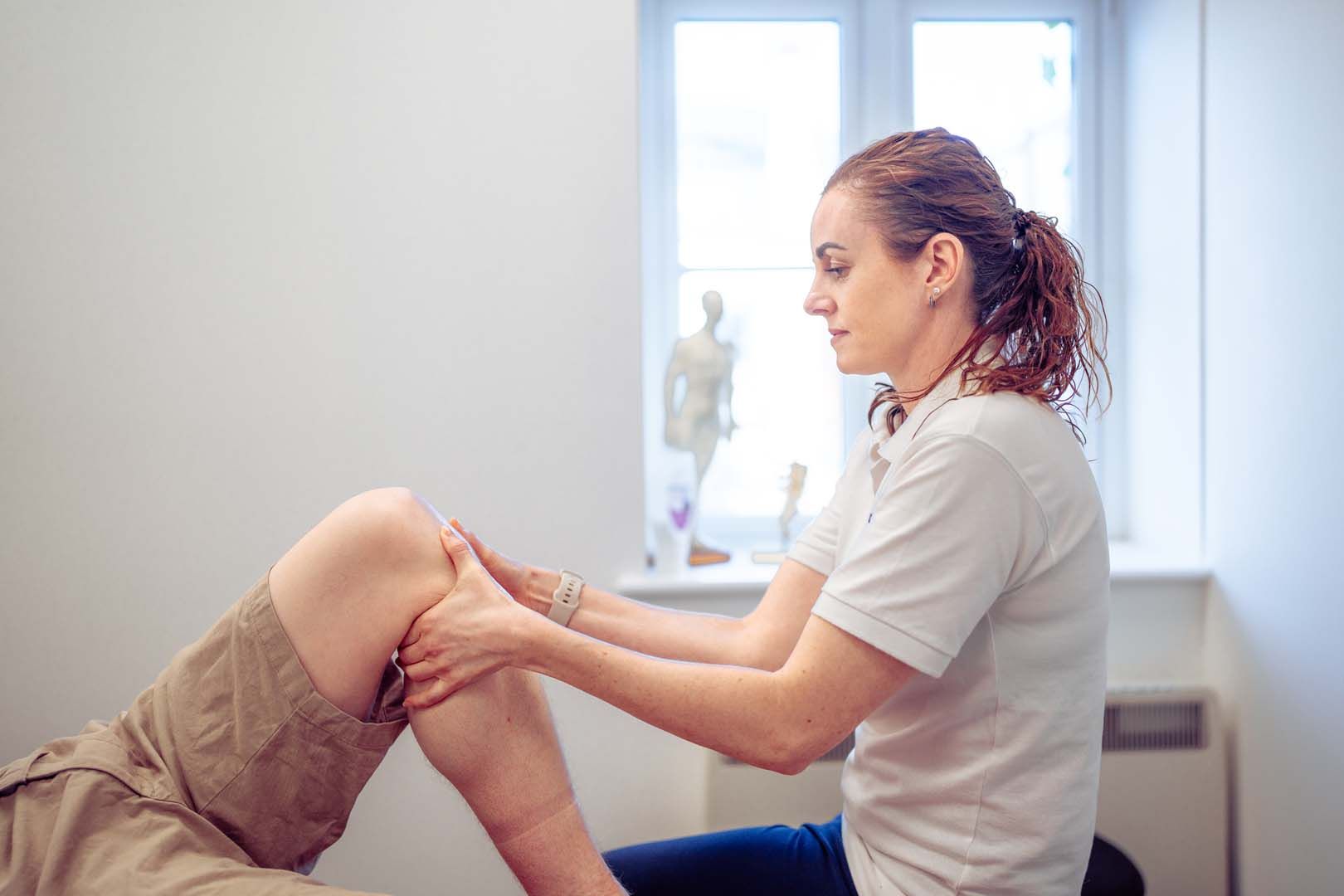
Manual Therapy
To improve joint mobility, ease stiffness, and reduce painful muscle tension around the knee.
Exercise Therapy
A structured strengthening plan focused on the quadriceps, hips, and glutes — proven to reduce pain and improve long-term knee function in osteoarthritis.
Laser Therapy
Laser therapy can be used to reduce the swelling, pain and inflammation associated with knee osteoarthritis.
Acupuncture
Acupuncture can be used for pain relief so you can keep active and moving.
Hyaluronic Acid Injections
We can inject Hyaluronic Acid into your knee joint under ultrasound guidance. Hyaluronic Acid is a substance that acts like your own knees joint fluid and it helps in lubrication of the joint. Hyaluronic acid injections are safe and effective and can be repeated as required.
Our aim is to give you long-term control over your knee symptoms — not just short-term relief.
Ready to Feel Better?
Knee osteoarthritis doesn’t mean stopping the activities you enjoy.
With the right rehabilitation plan — tailored to you — most people can stay active, strong, and mobile for years to come.
Book an appointment with Wickford Physiotherapy today and start moving with confidence again.
Frequently Asked Questions
1. Do I need an X-ray or MRI to diagnose osteoarthritis?
Not always. Most cases can be diagnosed clinically based on symptoms and examination.
We can arrange imaging if it’s needed to confirm findings or rule out other issues.
2. Will physiotherapy actually help osteoarthritis?
Yes — exercise and physiotherapy are the first-line recommended treatments for knee osteoarthritis.
Research shows strengthening and movement therapy can significantly reduce pain and improve function.
3. Is osteoarthritis the same as “bone-on-bone”?
Not exactly. Many people have changes on X-ray but very manageable symptoms.
Pain is influenced by more than just joint space — muscle strength, movement patterns, and inflammation all play a big role.
4. How long will it take to see improvement?
Many people notice changes within a few weeks of consistent treatment.
Meaningful improvements in strength and mobility usually develop over 6–12 weeks.
5. Can orthotics or insoles help?
Yes — if foot alignment is increasing load on the knee, custom orthotics can help reduce pressure on painful areas.