SHOCKWAVE THERAPY.
Shockwave therapy is a non-invasive treatment that uses sound waves to relieve pain and support natural healing in long-standing or stubborn injuries.
Written under the guidance of Jack Holland, Chartered Physiotherapist and Sports Therapist (BSc, MSc, MCSP, MAAP), supporting patients across Wickford, Basildon, Rayleigh and South Essex.
What Is Shockwave Therapy?
Shockwave therapy (Extracorporeal Shockwave Therapy – ESWT) delivers mechanical sound waves into injured tissues to increase blood flow, break down scar tissue, and stimulate the body’s natural repair process.
It is commonly used for:
- Tendon-related pain (Achilles,
patellar,
rotator cuff)
- Plantar fasciitis and heel pain
- Tennis elbow and golfer’s elbow
- Chronic muscle tension
- Calcific tendinopathy
- Hip, shoulder, and knee pain
Because it targets the underlying cause of pain, it can be particularly helpful for injuries that have persisted for several months.
Key Points of Shockwave Therapy
1. Non-Invasive & Safe
No injections, medication, or surgery. A gentle, non-surgical option suitable for most patients.
2. Supports Pain Relief
Many people notice improvement within 1–3 sessions as inflammation reduces and tissue healing begins.
3. Helps Break Down Scar Tissue
The sound waves help reduce adhesions and calcification that contribute to long-term pain.
4. Stimulates Natural Healing
Encourages collagen production and promotes tissue regeneration.
5. Useful for Long-Term or Persistent Injuries
Especially helpful for conditions lasting more than three months or those not improving with rest or standard treatment.
How Shockwave Therapy Works
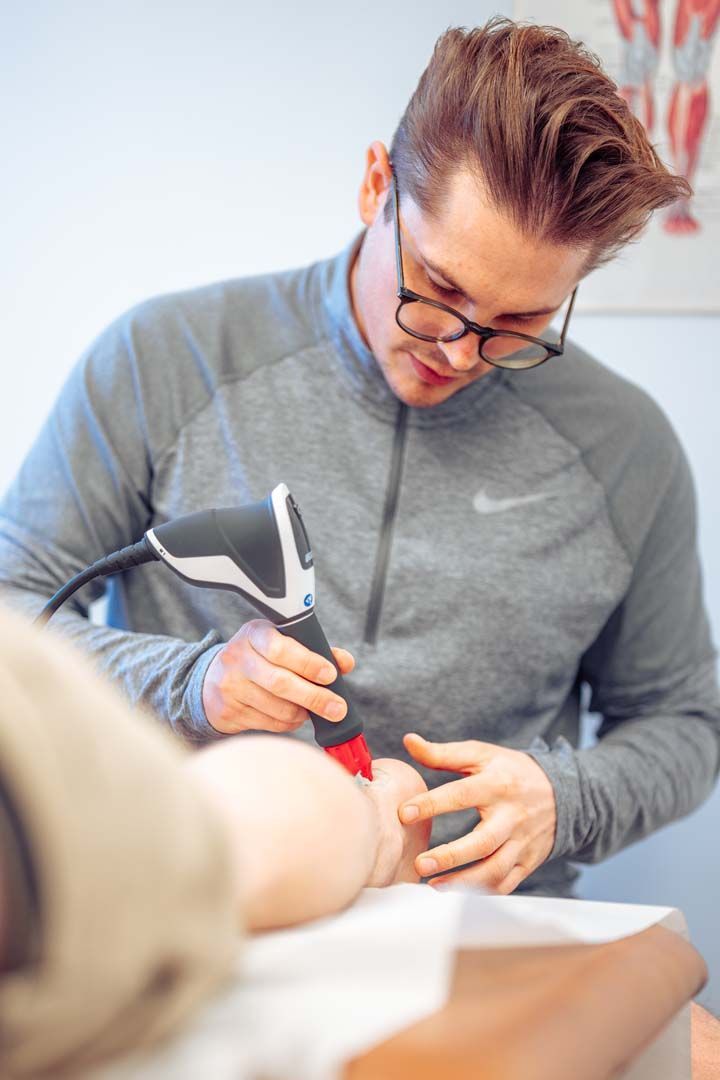
A handheld device delivers controlled shockwaves into the affected area. This creates a mild, controlled stimulation that triggers the body’s natural healing response.
This process may help with:
- Improved blood circulation
- Reduced inflammation
- Breaking down tight or knotted tissues
- Tendon repair and strengthening
- Desensitising painful areas
A typical session lasts 10–15 minutes, and most treatment plans involve 3–6 sessions.
Conditions Shockwave Therapy Can Help With
Shockwave therapy is commonly used to treat a range of persistent musculoskeletal conditions, particularly those involving chronic tendon pain or poor tissue healing. It is often recommended when symptoms have not fully responded to rest,
exercise-based rehabilitation, or other conservative treatments. By stimulating blood flow and activating the body’s natural repair processes, shockwave therapy can help reduce pain, improve function, and support long-term recovery in the following conditions:
- Achilles tendinopathy
- Plantar fasciitis / heel pain
- Patellar tendinopathy
- Tennis elbow / golfer’s elbow
- Rotator cuff tendinopathy
- Calcific tendinopathy
- Shin splints
- Hip and gluteal tendinopathy
- Hamstring tendinopathy
Book an
appointment with Wickford Physiotherapy today and start moving with confidence again.
Frequently Asked Questions
1. Does shockwave therapy hurt?
Some people find it slightly uncomfortable over sensitive areas, but the sensation is generally tolerable and eases as the tissues heal.
2. How many sessions will I need?
Most patients typically need 3–6 sessions, once per week.
3. When will I feel results?
Many notice improvement after 1–2 sessions, with full benefits achieved over the full treatment plan. Benefits continue to occur 3 months after treatment.
4. Can I return to daily activities afterwards?
Yes, you can continue with your normal day. We usually advise avoiding intense exercise for 24–48 hours.
5. Is shockwave therapy safe?
Yes. It is clinically recognised, non-invasive, and suitable for most people.
6. Who should avoid it?
Shockwave therapy isn’t recommended for people who are:
- Pregnant
- Living with severe circulation problems
- Living with nerve disorders
- Experiencing tumours in the treatment area
- Patients on blood thinning medication